Why a Matching Paint Chip Can Look Wrong at Home
A matching paint chip can mislead when its finish and the existing paint differ. Compare samples carefully to choose a closer touch-up match.
The most common mistake with a matching paint chip is treating the colour name as proof that a touch-up will disappear. Even a chip from the right range can lead to a visible patch if the old paint has a different finish, texture or degree of wear. Check those details before buying paint.
Matching paint chips
Start by deciding whether you are touching up an existing surface or choosing a new colour. For a touch-up, the chip is only one clue: the paint on the wall may have changed through cleaning, scuffs or light exposure, and the sheen can make a match look different.
For a new wall, focus on how the paint colour works with the fixed materials and finishes in the room. A chip helps narrow the choice, but it cannot show the full effect of a large painted area or replicate the wall’s finish.
Touch-up conditions
Compare a chip with a clean patch of the surface, close to the place you need to repair. Avoid a mark, a faded edge or a spot that has been protected behind furniture. Hold the chip flat against the surface and inspect the boundary.
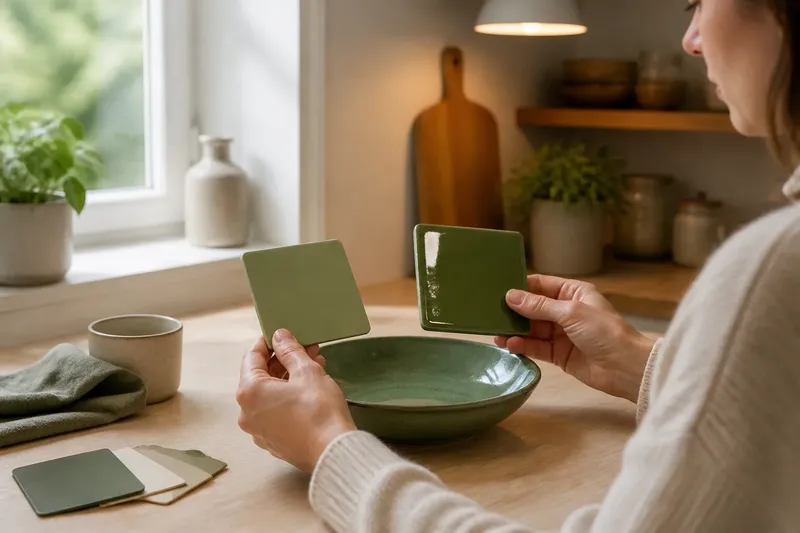
Check the finish as well as the colour. Gloss, satin and matt surfaces reflect light differently; a colour that seems close may still stand out if its sheen is unlike the surrounding paint. If the wall is textured, note that a smooth chip cannot show how the finished surface will look.
When the existing paint is old or the repair is prominent, ask a paint specialist about colour matching from a sample taken from the actual surface. Follow their advice on removal and repair, particularly if the surface material or coating is uncertain.
New wall choices
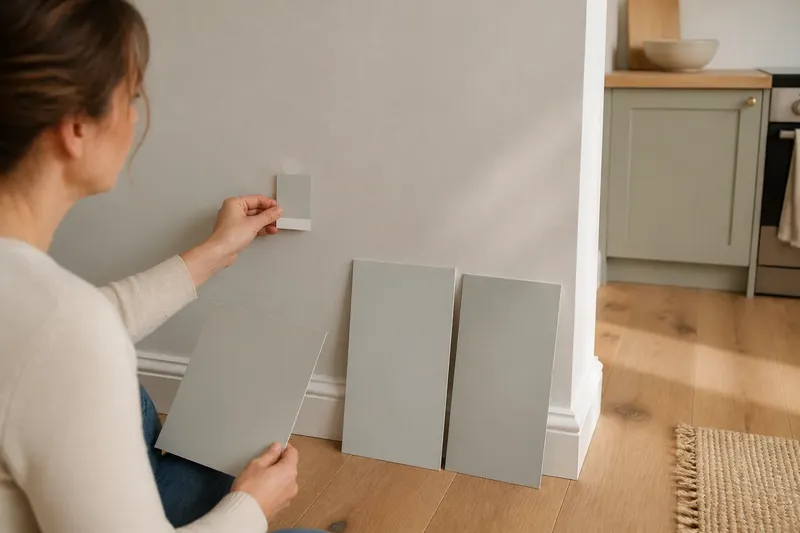
For a larger area, place a manufacturer-approved sample on card or use a movable sample board. Set it where the paint will go, then view it against the permanent materials nearby, such as a timber floor, worktop or built-in cupboard. Do not rely on the white margin around a small chip as your comparison background.
Imagine you are choosing a pale grey for a room with a warm timber floor. You put two manufacturer-approved sample boards against the floor and find that one looks distinctly cooler beside the wood, while the other feels more in keeping. The observable difference gives you a reason to favour the second for that room, without assuming either chip will match an old painted wall.
Sample decisions
- Check whether the sample is for a touch-up or a new wall; if it is a touch-up, compare with the existing surface, but if it is a new wall, assess the colour in its intended position.
- Check whether the comparison patch is clean and representative; if it is marked or protected from wear, choose another patch, but if no suitable patch is accessible, ask a paint specialist about a sample from the surface.
- Check whether the sample and wall have similar sheen; if they differ, compare a suitable paint sample with the existing finish, but if the finish is uncertain, seek advice before buying.
- Check whether the surface is textured; if it is, do not treat a smooth chip as a finish match, but if the texture is slight and colour is the only concern, judge the colour separately and record the texture mismatch.
- Check whether the sample is large enough to judge the intended wall; if it is too small, use a manufacturer-approved board, but if that is unavailable, compare several chips together without treating them as a full-wall preview.
- Check whether the sample is placed beside fixed materials; if it is, judge the colour there, but if it is beside a movable accessory only, move the sample to the floor, worktop or other permanent surface first.
Questions about samples?
Why can a paint chip mislead?
A chip is small and usually does not reproduce the wall’s finish or texture. The old paint may also have changed, so a matching colour name alone cannot establish a touch-up match.
Should I compare paint chips in the room?
Yes, for a new colour, place the chip or sample board where the paint will be used and beside fixed materials. For a touch-up, compare it directly with a clean, representative area of the existing paint.
What if two chips look alike?
Put them side by side against the intended surface and inspect their edges. If you still cannot distinguish them, use a larger approved sample for a new wall or ask about matching the actual surface for a touch-up.
Can a phone photo confirm a paint match?
No. A phone screen and camera can shift how a colour appears, so use a photo only as a reminder of which samples you considered. Make the decision with the physical sample and surface together.
Worked touch-up example
Say you need to repair a small scuff on a matt-painted hall wall. Your starting information is a paint tin label with a colour name, a chip from the same range, and an undamaged patch of wall beside the repair. First, place the chip directly against that patch and compare the colour at the edge. Next, check whether the chip’s finish is matt and whether the wall has a noticeable texture. If the colour and finish look close but texture differs, the chip has not settled the repair; ask a paint specialist whether a small sample can be matched to the actual surface. The result is a clear decision: buy a suitable touch-up only if its colour and finish are credible for the wall, or seek a surface match if either remains uncertain.
Choosing the comparison
For a touch-up, judge the sample against the existing paint and account for finish, texture and wear. For a new wall, judge a larger sample beside the room’s permanent materials. A matching paint chip is most useful when you know which decision it can support—and which details it cannot show.